
Table of contents
Shankhpushpi and Gotu Kola are two respected Ayurvedic herbs that may help alleviate menopause-related symptoms such as brain fog, mood shifts, and sleep disruptions. If you’re exploring Shankhpushpi vs Gotu Kola, it's helpful to understand how hormonal changes can impact memory, focus, and emotional resilience, and how each herb supports the mind in a slightly different way, both on its own and in combination.
This guide covers traditional use, emerging research, key mechanisms, and practical ways to use them for clearer thinking and steadier moods during menopause.
Introduction to Shankhpushpi and Gotu Kola
Shankhpushpi and Gotu Kola have long been valued for their mind-supportive properties, though they work through different pathways.
Shankhpushpi (Convolvulus pluricaulis) is classically categorized as a Medhya Rasayana, an herb traditionally used to nourish the intellect and calm the nervous system. Ayurvedic texts such as the Charaka Samhita describe its role in easing anxiety, mental restlessness, and sleep disturbances, all of which may intensify during menopause.
Gotu Kola (Centella asiatica), often referred to as a rejuvenative tonic for the brain and connective tissue, has a parallel but distinct legacy. Traditionally used to support longevity, mental clarity, and circulation, Gotu Kola is associated with enhanced focus and cognitive renewal. Contemporary research highlights its relevance for cerebral blood flow, stress resilience, and age-related cognitive changes, areas that can feel especially important during the menopausal transition.
Together, these herbs offer a balanced approach: Shankhpushpi supports steadier calm and easier wind-down, while Gotu Kola revitalizes mental clarity and focus, an interplay that will reappear throughout this article as we explore emotional ease versus cognitive renewal.
Traditional Uses of Shankhpushpi and Gotu Kola
In Ayurveda, both herbs are considered allies of the mind, yet their traditional applications reveal subtle differences, differences that matter during menopause, when shifting hormones can amplify Vata/Pitta patterns and show up as brain fog, restlessness, mood changes, or disrupted sleep.
Shankhpushpi has been widely prescribed for anxiety, insomnia, and emotional agitation. Its cooling, grounding qualities are often used to help pacify aggravated Vata and Pitta, which may fluctuate during menopause.
Gotu Kola, by contrast, is revered as a Rasayana for rejuvenation and tissue nourishment. Classical and folk traditions across Ayurveda, Traditional Chinese Medicine, and Southeast Asian systems have used it to support memory, concentration, wound healing, and healthy circulation. Its affinity for the nervous system and microcirculation makes it particularly relevant for mental fatigue, brain fog, and the feeling of cognitive dullness that some women report during midlife transitions.
These herbs are often combined in formulations designed to support long-term mental clarity while maintaining emotional equilibrium, reflecting Ayurveda’s emphasis on synergy rather than single-ingredient solutions.
Stress and Emotional Well-Being with Shankhpushpi

Shankhpushpi is widely recognized for its profound effects on emotional health, particularly in reducing stress and calming the nervous system. As an adaptogenic herb, it aids in regulating mood and balancing stress hormone levels during menopause.
Its active components help modulate neurotransmitters such as cortisol and adrenaline, promoting a state of calm [6]. Experts highlight Shankhpushpi’s role in strengthening the nervous system, reducing mood swings, and mitigating the emotional turmoil often associated with menopausal hormonal changes[7].
Research has also linked Shankhpushpi to improvements in symptoms like insomnia, irritability, and anxiety. This is largely due to its antioxidant properties and its effect on serotonin and dopamine levels[8].
Moreover, the calming impact of Shankhpushpi is not limited to menopause; it can support emotional steadiness during other hormonal shifts, such as puberty[9]. Despite promising results, more rigorously controlled studies are needed, as most findings are based on multi-herbal blends[10].
Cognitive Clarity and Rejuvenation with Gotu Kola

Gotu Kola offers a complementary, more revitalizing form of cognitive support. Its primary active compounds, triterpenoids such as asiaticoside, madecassoside, and asiatic acid, are associated with microcirculation support and cellular resilience. Improved blood flow can support oxygen and nutrient delivery to the brain, which may translate to clearer thinking and improved focus.
Research indexed by the National Institutes of Health (NIH) and PubMed Central (PMC) has linked Gotu Kola to benefits that may show up in real life as steadier focus at work, easier word-finding in conversations, and more confidence in day-to-day decisions:
Enhanced memory and attention
Reduced mental fatigue
Support for stress resilience and emotional steadiness
Additionally, Gotu Kola’s role in collagen synthesis and connective tissue health is often discussed in the context of healthy aging. This may indirectly support vascular integrity, an often-overlooked aspect of cognitive longevity. For menopausal women experiencing “brain fog” or reduced mental stamina, this rejuvenative effect can feel particularly meaningful.
Comparative Insights: Shankhpushpi vs. Gotu Kola
Although both herbs support mental and emotional health, their mechanisms and strengths differ:
Gotu Kola: Supports cognitive performance by promoting healthy cerebral blood flow and microcirculation, supporting collagen/connective tissue integrity, and encouraging mental clarity and focus. Its action is more revitalizing, often a fit for cognitive fatigue and age-related mental dullness.
Shankhpushpi: Works primarily through calming and stabilizing pathways, supporting GABA activity and a balanced stress response. It is especially relevant for anxiety, sleep disturbances, and emotional reactivity.
For women seeking sharper focus and cognitive renewal, Gotu Kola may be particularly supportive. For those prioritizing calm, emotional balance, and restful sleep, Shankhpushpi often takes precedence. Many practitioners recommend using them together to address both sides of the menopausal experience, emotional ease, and mental clarity.
Practical Integration of Shankhpushpi and Gotu Kola

Both herbs are available in versatile, easy-to-use forms. Typical options include:
Gotu Kola: Commonly taken as 300–600 mg capsules, 1–2 g of powder, or as a tea prepared from dried leaves. It is often consumed in the morning or early afternoon to support focus and circulation.
Shankhpushpi: Often used as ½–1 teaspoon of powder with warm water (or milk, if tolerated), or in capsule and syrup forms, taken once or twice daily.
When combined, these herbs are frequently included in balanced formulations designed for mood, cognition, and hormonal transitions. A nutrient-dense diet rich in antioxidants, healthy fats, and adequate protein can further support overall results.
As with any herbal regimen, individualized guidance from a qualified practitioner is recommended, especially for women who are pregnant, nursing, on medication, or managing chronic conditions.
Relevant Products
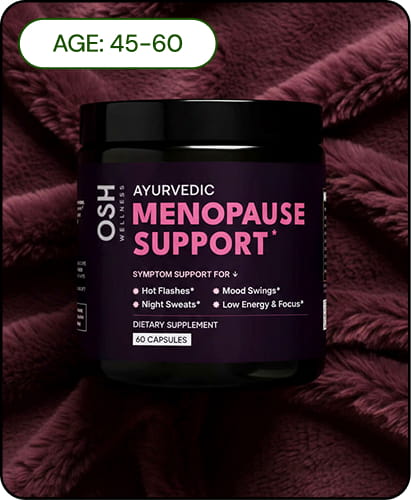
There is a growing selection of commercial menopause-support supplements leveraging these herbs. One example is Osh Wellness Menopause Support, which combines black cohosh, ashwagandha, and shatavari in clinically-informed dosages. Such products offer a convenient solution for those seeking natural relief from menopausal symptoms.
Conclusions
Shankhpushpi and Gotu Kola represent two complementary approaches to menopausal cognitive and emotional care, so you can choose support that matches your current season: steadier calm and easier sleep when you feel wired or reactive, and clearer focus with better mental stamina when brain fog and fatigue are taking the lead.
Shankhpushpi offers grounding, calm, and stress regulation, while Gotu Kola provides cognitive rejuvenation and circulation support. Together, they reflect Ayurveda’s nuanced understanding of the mind, one that values both tranquility and clarity. Used mindfully, these herbs can help women navigate menopause with greater ease, focus, and emotional balance.
FAQs
What are the main differences between Shankhpushpi and Gotu Kola?
Shankhpushpi is more calming and stress-focused, while Gotu Kola emphasizes mental clarity, circulation, and cognitive rejuvenation.
Can I take both herbs together?
Yes. They are often combined in traditional and modern formulations to support both emotional balance and cognitive function.
Are there any side effects?
Both herbs are generally well tolerated. Mild digestive upset or headache may occur in sensitive individuals, particularly at higher doses.
How long does it take to notice benefits?
Many women report subtle improvements within 3–4 weeks, with more noticeable benefits after 6–8 weeks of consistent use.
Where can I find these herbs in supplement form?
They are available in health food stores, Ayurvedic pharmacies, and online through trusted brands.

Author: Shruti Mishra
Shruti is the founder of Osh Wellness. She is a certified nutritionist and a professional plant-based chef from Natural Gourmet Institute, NY. She has worked with Ayurveda, food & nutrition for over 15 years.
*These statements have not been evaluated by the Food and Drug Administration. Any product mentioned in the article is not intended to diagnose, treat, cure or prevent any disease. This article is not medical advice and is not meant for every situation. Every person's body is different and may respond differently to supplements, remedies, or treatments.
Sources
PubMed Central (PMC) – Centella asiatica and cognitive function
NIH/NCBI – Gotu Kola (Centella asiatica) monograph-style research summary
Journal of Ethnopharmacology – Centella asiatica and neuroprotection
Easy Ayurveda – Shankhpushpi (Convolvulus pluricaulis) overview
Frontiers in Aging Neuroscience – Herbal support for cognitive aging